

Embroidery & Sewing
I am not a teacher but keen to learn and share. For the final project I approached an organization involved in child welfare. Basic education and daily life skills are taught by a group of volunteers. I tried to bring the projects to the children which will suit their needs and are aligned with Waldorf curriculum.
We started with the basic stitches and gradually progressed to more complex projects to ensure that the children build a strong foundation and feel a sense of achievement as they master each skill. Goal is not only to teach embroidery and sewing but also to nurture a love for creativity, craftsmanship, and learning. Using donated fabric and clothes not only makes the projects more sustainable but also teaches children the value of repurposing and recycling.
Pari Malhotra


Prairie Plants: Eco-Dyeing with Illinois Native Plant Life
When I walked into the woods in August of 2022 I was panicking. I had no clue what I was going to pursue for my Waldorf Handwork Teacher Training capstone project. So I walked and walked, my only goal to set my mind at ease and attain the meditative mindset a good walk in the woods can bring. I picked up little treasures along the way: an acorn, a black walnut, some leaves and pretty flowers, and tucked them into my pockets. When I arrived home I thought, “Maybe I can use some of these for nature crafting. Maybe that’s my project.” So I did some research. It turns out, every single item I brought home that day was a dye plant. I was shocked all of the plants I had in my hands could produce beautiful color.
Mary Kate Jenkins

Natural Dyeing Through the Grades
Dyeing with plants is a truly magical experience. By utilizing the colors of nature, one can create a whole rainbow with minimal investment and experience. For these reasons, I chose to explore the world of natural dyeing for my final graduation project. Before beginning this project, I had participated in a natural dyeing workshop and had done a couple of natural dyeing projects with children. The wonder and awe it inspired among adults and children alike is so inspiring and just plain fun. With this project, I wanted to explore organic ways to insert dyeing into an already robust handwork curriculum, creating naturally dyed materials that can be used in the classroom in other various projects throughout the year.
Jill Angelo

My journey through Wet Felting & Challenges in Online Teaching
While creating the projects for each grade, I experimented in creating whole to parts and parts to whole to align different learning needs, this also added necessary complexity and variation to the projects. I faced various challenges in this online teaching experience and have worked on those challenges to bring a smooth learning experience to children. Wet-felting keeps you active - even if you are sedentary - and keeps your ‘little grey cells’ active by taking you out of your comfort zone. It involves working at a methodical pace, which is very beneficial for our overworked and overtired brains that have been hurried and excited throughout the day.
Aparna Basu

“The Question Holds the Lantern” - Eight Ideas to Accompany a Young Person’s Journey
I have celebrated a winter solstice lantern walk with my playgroup families every year since then. Getting together with playgroup parents to drink chai and make lanterns in preparation has become a treasured winter tradition. When it came time to choose a topic for this final handwork project, lanterns were at the top of my list. When I daydream what it would be like to be part of a school community, my imagination offers me a picture of a winter festival, lit by each grade’s own special lantern.
Meg Quinlisk

Living Off the Land: Handwork inspired by the farm and forest
My project is inspired by my school, Lakeside School at Black Kettle Farm, a farm and forest Waldorf school, in the Adirondack foothills.
Lakeside School currently has early childhood programs and Grades 1 to 3. My final project envisions an imaginary future for Lakeside School, as a nature-based Kindergarten through Grade 8 school, in which the inspiration comes from the land. The school is located on an old farm property and is surrounded by forests. The land offers a rich diversity of habitats for nature-based learning and creative handwork activities.
Karen Price

Pouches with a Purpose
In my many years of teaching, I have found no lack of need for new, engaging, and most importantly flexible projects for the students that finish first and need another task before I introduce another big project to the class. The students who finish first shouldn’t be put to work preparing materials or helping other students because the teacher hasn’t got anything better for them to do. The engine needs to be stoked, as they (Elizabeth and others) say, and it is doing them a disservice by failing to have a better plan for when they’ve completed their major task. It is also helpful to have shorter projects to introduce a skill in a more manageable and forgiving way before bringing a bigger project.
Katie Miller

Wet Felting in the Waldorf Classroom
Wet felting, a process of forming non-woven fabric from animal fur through heat, moisture, and agitation, provides an opportunity for students in the Waldorf school to transform a readily available, natural material, most often sheep’s wool, into practical and beautiful objects through a rich sensory experience, while using their heads, hearts, and hands. While wet felting cultivates sensory maturation in line with one of Waldorf pedagogy’s tenets of helping the child incarnate fully into their physical body, it also cultivates social skills, aids in fostering connections between the various subjects of the curriculum, and nurtures an understanding of the students’ interconnectedness with nature.
Adél Krupp
Connecting to Nature Through Handwork
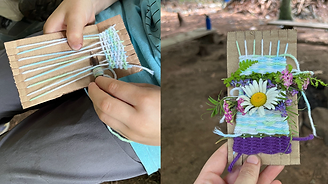
My theme for this final project is “Connecting to Nature Through Handwork” with a goal of deepening a connection between the whole child and the natural world, through the rhythms of the seasons, awareness of space, and creating something beautiful, useful and meaningful from natural materials. Having taught at a nature school for a decade now, I have always been a nature enthusiast and striving to deepen my own connections and curiosities, as well as sharing this passion with the students in my care. Within the past few years, I have been inspired by aspects of Waldorf Education, handwork in particular, and striving to incorporate more into our programs.
Sarah Sullivan