
Beyond Strategies: Supporting Every Child Through a Deeper Understanding of the Human Being


Every teacher has experienced the same moment.
One child seems unable to settle into the lesson. Another appears to drift away. One is overwhelmed by noise or movement, while another seems to seek constant sensory input. We search for strategies, accommodations, and techniques that might help—but often the deeper question remains:
What is really happening within this child?
In Waldorf education, our work begins from a different place. Rather than starting with labels or interventions, we seek to understand the developing human being. When we deepen our understanding of children's physical, sensory, emotional, and spiritual development, our teaching naturally becomes more responsive, more inclusive, and more effective.
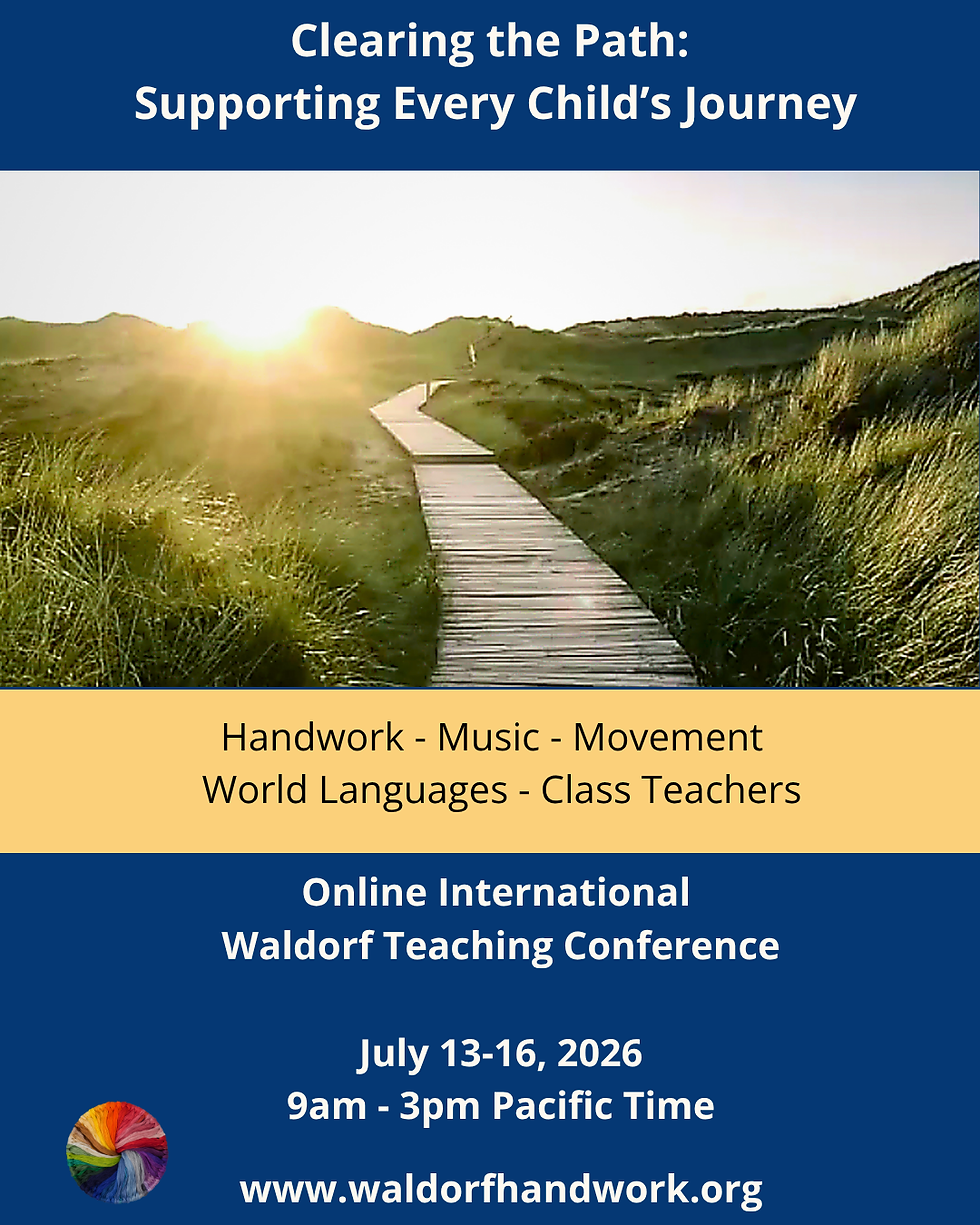
At our upcoming July conference, Clearing the Path: Supporting Every Child's Journey, keynote speaker Ann Swain will invite us into this deeper conversation through two thought-provoking presentations that explore what it truly means to meet every child.
Breathing, Sleeping, and Waking
Widening our understanding of the human sensory system in the context of Steiner's contribution to knowledge of the human being.
In the first lecture of the first teacher training seminar, Steiner states that "education consists of teaching proper breathing" as children cannot of themselves breathe properly. Just after that immense statement he calls on teachers to help children learn to move between sleep and wake in a healthy way—learning to take experiences from their sensory day activity into sleep where the soul and spirit can work on this and carry back from sleep strength—true strength for their human physical existence.

So what might that education look like that supports children to breathe properly without teaching specific breathing techniques, and to move healthily between sleep and wake states?
This session will seek to provide some hooks upon which to hang some deeper and perhaps broader ideas of the human sensory organisation and a look at how those children struggling to integrate into their sensory system may express overly alert or under-responsive working of their senses.
These questions invite us to look beyond behavior and toward the deeper rhythms of development. Rather than asking only how children learn, we begin asking what supports healthy human development itself?
Returning to the Whole
Many teachers feel the growing pressure to differentiate instruction for an increasingly diverse classroom. But does differentiation require creating twenty-five different lesson plans?
Ann offers another possibility.
Good differentiation needn't be 25+ different lesson plans.
This session will aim to offer a holistic consideration of different learning barriers and how the teacher might better stand, unfragmented, before a group of ready learners.

Standing on the shoulders of those who have gone before us, might we be able to see further and teach wider without exhausting our own wellsprings? Asking "What's Waldorf about Waldorf?" might we be able to meet both the whole class and the multiplicity within the whole without compromising our understanding of the child as a physical and spiritual being?
This session will offer some keys for observing and deepening the teacher's understanding of different learning patterns and suggest some generally good and simple techniques to ensure every school day is of pedagogical value to every child.
Does meeting the needs of the dyslexic or autistic learner disadvantage the learning of the neurotypical learner? Ann will consider ways we can move away from the concept of "fair" and instead move toward equity in our teaching—recognizing that by removing barriers for one child, we need not erect them for others.
Looking More Deeply
Whether we teach handwork, movement, music, world languages, or serve as a class teacher, we are continually called to observe more deeply. Every child brings a unique way of experiencing the world, and every classroom invites us to grow alongside them.
Ann's presentations remind us that supporting diverse learners is not simply about adding more techniques to our teaching toolbox. It is about cultivating a richer understanding of the human being, so that our teaching arises from relationship rather than reaction.
When we learn to see more deeply, we often discover that the practices which best support one child ultimately enrich the learning environment for everyone.


Comments